Apt. Trade Price Lookup
Look up apartment trade prices by region and date, with autocomplete search by apartment name.
Source: Ministry of Land, Infrastructure and Transport - Apt. Trade Data (data.go.kr)
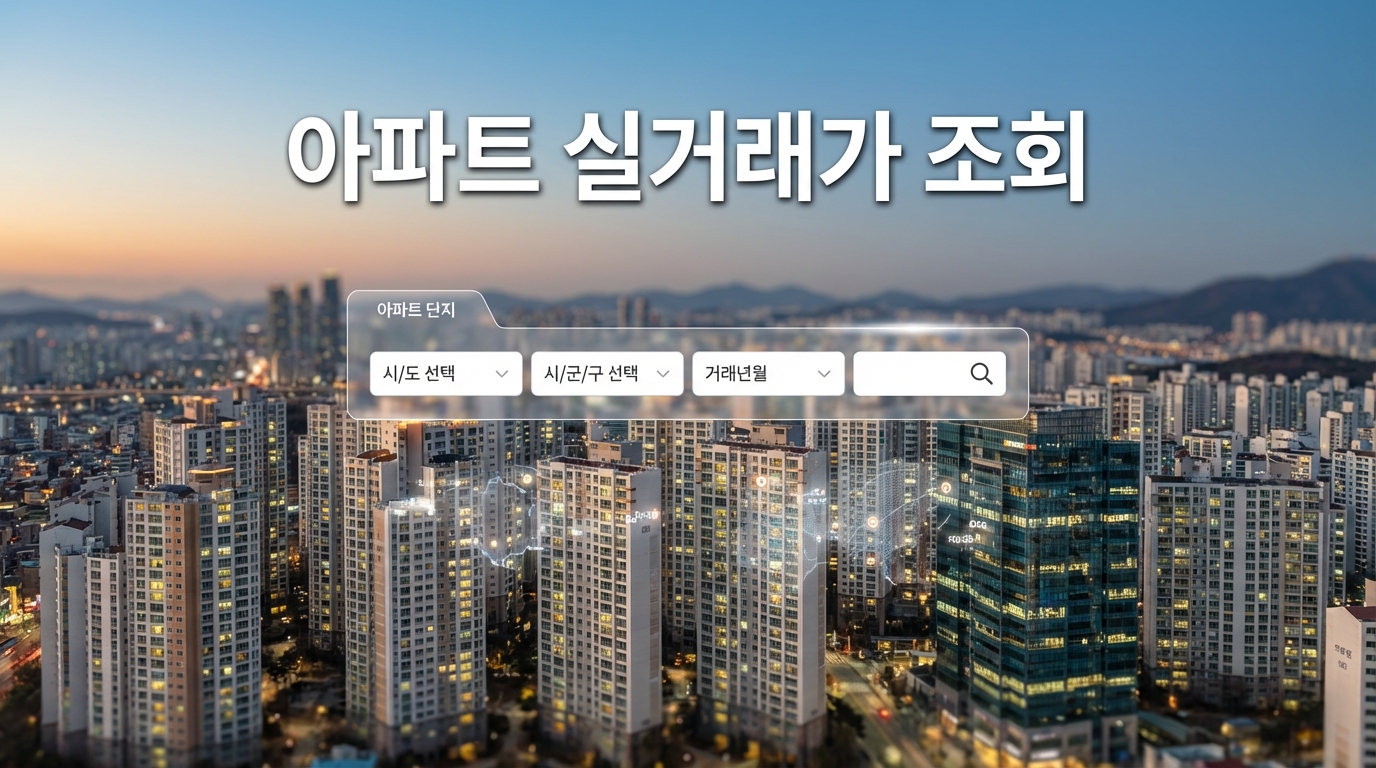
Apartment Trade Price Lookup Guide
What is Apt. Trade Price Lookup?
The Apartment Trade Price Lookup tool provides access to official real estate transaction records published by the Korean Ministry of Land, Infrastructure and Transport (MOLIT, 국토교통부). Under the Real Estate Transaction Reporting Act (부동산 거래신고 등에 관한 법률), all real estate transactions in South Korea must be reported to the government within 30 days of the contract date. This mandatory reporting system creates the most comprehensive and reliable database of actual apartment transaction prices in the country. Unlike listed or asking prices, these are confirmed contract prices that have been legally reported and verified. This tool allows you to search apartment trade records by region (city/province and district) and transaction month, providing details including apartment name, dong (building number), trade price, exclusive-use area, floor level, transaction date, and construction year. The data is invaluable for homebuyers researching fair market values, sellers determining appropriate listing prices, real estate investors analyzing market trends, and anyone calculating capital gains tax obligations. Korea's apartment market, which represents over 60% of all residential housing, is one of the most closely watched economic indicators in the country.
How to use
Step 1: Select a city or province (시/도) from the first dropdown. The tool supports major metropolitan areas including Seoul, Gyeonggi-do, Busan, Daegu, Incheon, Daejeon, Gwangju, Ulsan, and Sejong — covering the vast majority of Korea's apartment market.
Step 2: Select a specific district (시/군/구) within the chosen city. Each district corresponds to a legal district code (법정동코드) that the MOLIT API uses to retrieve transaction data. Districts are where price variations are most significant — in Seoul alone, average apartment prices can differ by 2-3x between districts.
Step 3: Choose the transaction month you want to investigate. Select the year and month using the date picker. The most recent 1-2 months may have incomplete data as the 30-day reporting deadline means some transactions are still being processed.
Step 4: Click the Search button to query the MOLIT database. The system retrieves all reported apartment transactions for the selected district and month.
Step 5: Browse the results table showing every reported transaction with columns for apartment name, dong (building), trade price (in 10,000 KRW units), exclusive-use area (㎡), floor, transaction date, and year built.
Step 6: Use the apartment name search filter to narrow results to a specific apartment complex. Type part of the apartment name and the results will filter in real-time. Click 'Show All' to reset the filter.
Step 7: Review the Trade Summary section at the top, which displays total number of transactions, average trade price, highest price, and lowest price for the selected period and region.
Statistics
Trade statistics are calculated from all reported transactions within the selected district and month:
Total Trades = Count of all reported apartment transactions in the period.
This indicates market activity level — higher counts suggest active trading, while lower counts may indicate a cooling market or seasonal slowdown.
Average Price = Sum of all trade amounts / Number of trades (in 10,000 KRW)
Provides a general market level indicator. Note that averages can be skewed by a few very high or very low-priced transactions, particularly in districts with a mix of old and new apartments.
Highest Price = Maximum trade amount recorded in the period (in 10,000 KRW)
Typically represents the most premium apartment in the district — often a large unit on a high floor in a recently constructed complex with desirable views.
Lowest Price = Minimum trade amount recorded in the period (in 10,000 KRW)
Usually represents a small unit (often under 60㎡) on a lower floor in an older building.
Area Measurement: All areas are in exclusive-use area (전용면적, ㎡), which measures the actual living space inside the apartment unit. This excludes shared spaces like hallways, stairwells, and lobby areas. To convert to the commonly used 'pyeong' measurement in Korea: Area in pyeong ≈ ㎡ × 0.3025. For example, 84㎡ ≈ 25.4 pyeong (commonly referred to as '국민평형' or the standard family-size apartment).
Price per Pyeong = Trade Price / (Area × 0.3025), commonly used for comparing value across different-sized apartments.
Useful tips
1. Understanding Price Variations: Within the same apartment complex, prices can vary dramatically based on floor level, unit orientation, and view. Generally, higher floors command premium prices (often 5-15% more than lower floors), and south-facing units are preferred in Korea's climate for maximum sunlight. Corner units with views are also priced higher. When researching fair value, compare transactions for similar floor levels and unit types.
2. Data Timing Considerations: The 30-day mandatory reporting period means recent data is often incomplete. For the most accurate picture, look at data from 2-3 months prior when virtually all transactions have been reported. The most recent month's data should be treated as preliminary and may increase significantly as additional reports come in.
3. Seasonal Patterns: Korea's real estate market has well-documented seasonal patterns. Transaction volumes typically peak in spring (March-April) when families prepare for the school year in March, and in fall (September-October) before winter. Prices can be slightly softer during summer monsoon season (July-August) and deep winter (January-February) when fewer buyers are active.
4. Using Data for Capital Gains Tax: This tool integrates with the Capital Gains Tax Calculator. If you are planning to sell an apartment, search for recent comparable transactions to estimate your likely sale price, then use that figure to calculate your potential tax liability. This combination of tools provides powerful pre-sale financial planning capability.
5. Jeonse vs. Sale Price Ratio: While this tool shows sale prices, comparing them with jeonse (deposit-based rental) prices for the same complex can indicate market health. A jeonse-to-sale ratio above 70% may indicate an overheated rental market, while ratios below 50% suggest strong ownership demand.
6. New Construction Premium: Newly built apartments (built within 1-3 years) typically trade at a 10-25% premium over similar older units in the same area. This 'new construction premium' gradually diminishes over 5-10 years. When comparing prices, factor in the building age to make fair comparisons.
7. District-Level Research: Start with a broad district search to understand the price landscape, then narrow down to specific apartment complexes. Districts like Gangnam, Seocho, and Songpa in Seoul consistently show the highest average prices, while outer districts offer more affordable options. Understanding district-level price dynamics is essential for making informed buying decisions.