Lease Calculator
View as MarkdownCalculate the actual interest rate from operating lease quotes using monthly payment, acquisition cost, and residual value.
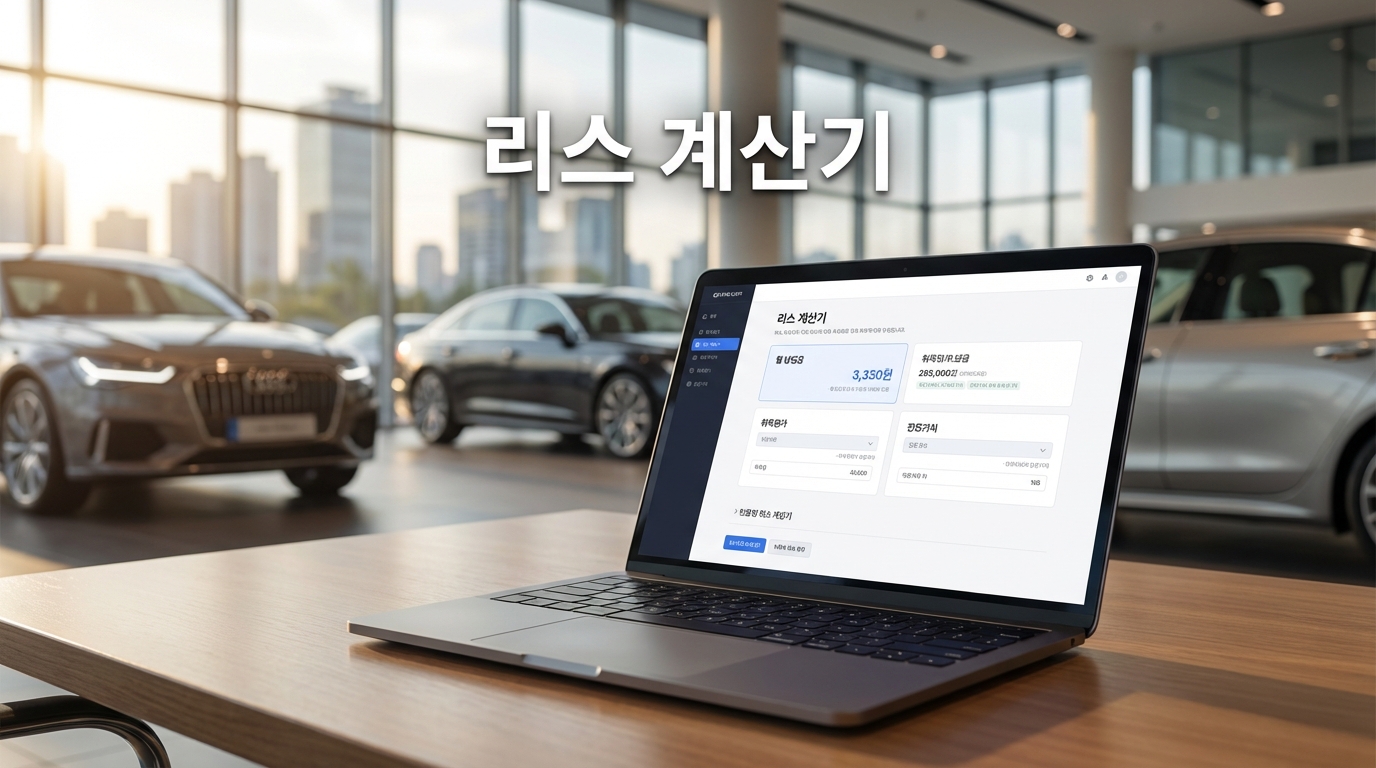
Lease Calculator Guide
What is a Lease Calculator?
The Lease Calculator is a specialized financial tool designed to reverse-engineer the implicit interest rate embedded in an operating lease agreement. In South Korea, operating leases — particularly for vehicles — are extremely popular, with the auto leasing market valued at over 30 trillion KRW annually. However, lease companies frequently present quotes showing only the monthly payment, acquisition cost, and residual value without explicitly disclosing the effective annual interest rate. This lack of transparency makes it difficult for consumers to compare lease offers with traditional loan financing or between different leasing companies. This calculator solves that problem by using the Newton-Raphson numerical method to derive the exact annual interest rate from the given lease terms. It also calculates the total cost of the lease, the total interest paid, and the average monthly interest expense, providing complete financial transparency. Whether you are leasing a car, commercial vehicle, office equipment, or industrial machinery, understanding the true financing cost is essential for making an informed decision about whether leasing is more cost-effective than buying outright or financing through a bank loan.
How to Use
Step 1: Enter the acquisition cost — this is the total price of the vehicle or equipment before any discounts. For a car lease, use the manufacturer's suggested retail price (MSRP) or the negotiated purchase price that the leasing company is using as the basis for the lease.
Step 2: Enter the residual value (잔존가치) — this is the predetermined value of the asset at the end of the lease term. A higher residual value means lower monthly payments because you are financing a smaller portion of the asset's value. However, if you want to purchase the asset at lease end, you will need to pay this amount.
Step 3: Enter the lease term in months. Common vehicle lease terms in Korea are 24, 36, 48, or 60 months. Shorter terms have higher monthly payments but lower total interest costs.
Step 4: Enter the monthly payment (월 리스료) as quoted by the leasing company. This should be the base monthly payment before any additional charges like insurance or maintenance packages.
Step 5: Enter the down payment if applicable (0 if none). A down payment reduces the financed amount, which lowers the effective monthly payment and the total interest cost. Some lease agreements also call this an advance payment or initial contribution.
Step 6: The calculator instantly displays the derived annual interest rate, total lease cost (down payment + all monthly payments), total interest expense, and monthly average interest. Use the calculated rate to compare against bank loan rates and other lease offers.
Formula
Basic Financial Metrics:
Total Cost = Down Payment + (Monthly Payment × Lease Term)
Total Interest = Total Cost - (Acquisition Cost - Residual Value)
Monthly Interest = Total Interest / Lease Term
Implicit Rate Calculation (Newton-Raphson Method):
The monthly payment in a lease follows the present value of annuity formula:
PV = PMT × [(1-(1+r)^(-n))/r] + RV × (1+r)^(-n)
Where:
PV = Acquisition Cost - Down Payment (present value of financed amount)
PMT = Monthly Payment
r = Monthly interest rate (unknown, to be solved)
n = Lease term in months
RV = Residual Value
Since this equation cannot be solved algebraically for r, the calculator uses the Newton-Raphson iterative method:
r(k+1) = r(k) - f(r(k)) / f'(r(k))
Starting from an initial estimate and converging to the precise monthly rate within 0.0001% accuracy, typically in 10-20 iterations.
Annual Rate = Monthly Rate × 12 (nominal annual rate, as per lease industry convention)
Example: A car with 50M acquisition cost, 20M residual value, 36-month term, and 1M/month payment:
Total Cost = 0 + (1,000,000 × 36) = 36,000,000 KRW
Total Interest = 36,000,000 - (50,000,000 - 20,000,000) = 6,000,000 KRW
The Newton-Raphson method yields approximately 5.8% annual rate.
Tips
1. Always compare the implicit lease rate to bank auto loan rates before signing. In many cases, a bank loan at a lower interest rate combined with an outright purchase can save significant money over the lease term, especially for long-term leases of 48-60 months.
2. Residual value is the most misunderstood variable in leasing. A higher residual value reduces your monthly payment because you are financing a smaller depreciation amount. However, this does not mean the lease is cheaper — it means the leasing company expects the asset to retain more value, or they are deferring cost to the lease-end purchase option. If you plan to return the asset, a high residual value benefits you. If you plan to buy it, the residual value is simply a deferred payment.
3. Down payments in leasing can be a double-edged sword. While a larger down payment reduces the monthly installment and total interest, it also means you are paying upfront for an asset you do not own. If the leasing company goes bankrupt or the lease is terminated early, your down payment may be at risk. Keep down payments reasonable (typically 10-20% of acquisition cost).
4. The calculated rate is a nominal annual rate (simple interest), which is the standard convention in the Korean leasing industry. The effective annual rate (compound interest) would be slightly higher: EAR = (1 + monthly rate)^12 - 1. For precise APR comparisons with bank loans, use the effective rate.
5. Watch out for hidden fees that are not reflected in the monthly payment: registration fees, insurance premium adjustments, early termination penalties, excess mileage charges, and wear-and-tear assessments at lease return. These can add 5-15% to the true total cost.
6. Operating lease payments are tax-deductible for business use vehicles in Korea (up to limits set by the Corporate Tax Act), making leasing particularly attractive for self-employed individuals and corporations. The annual deduction limit for vehicle lease payments is 8 million KRW.